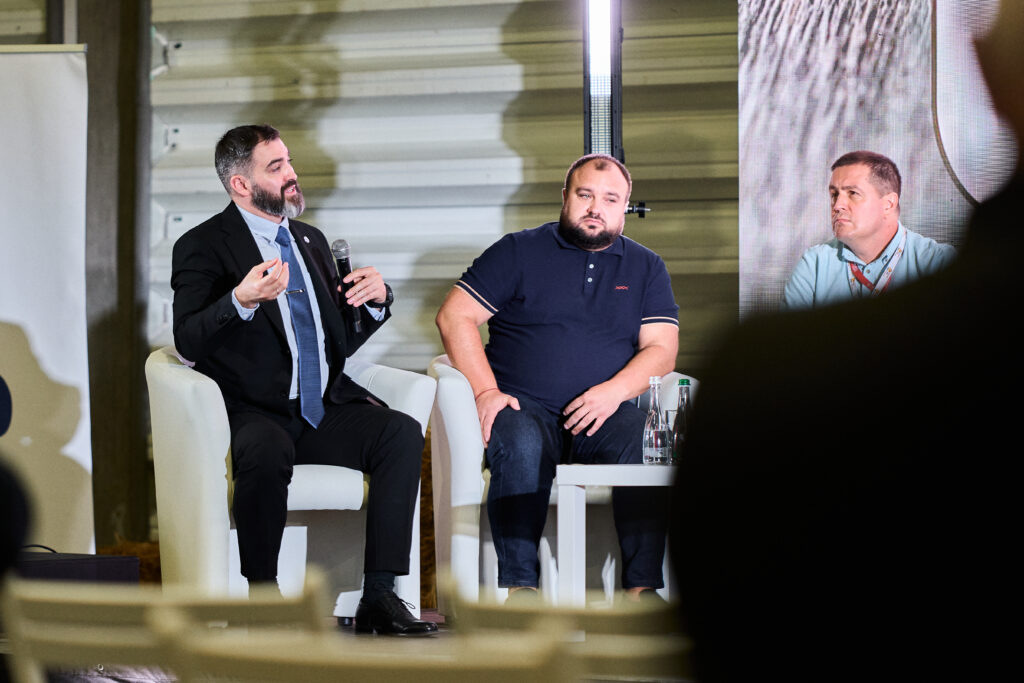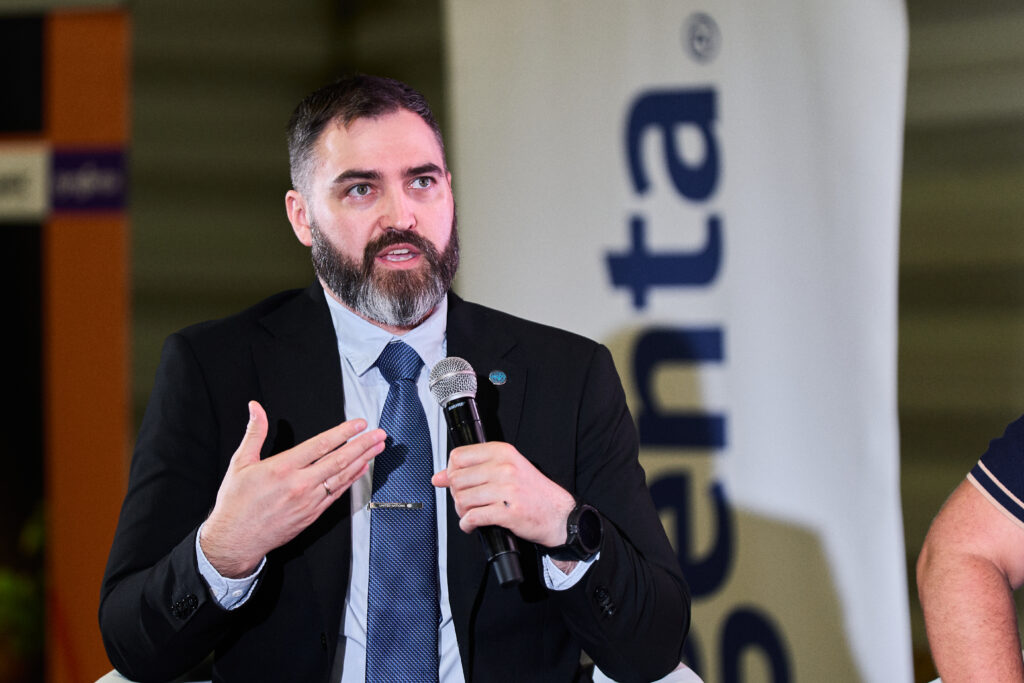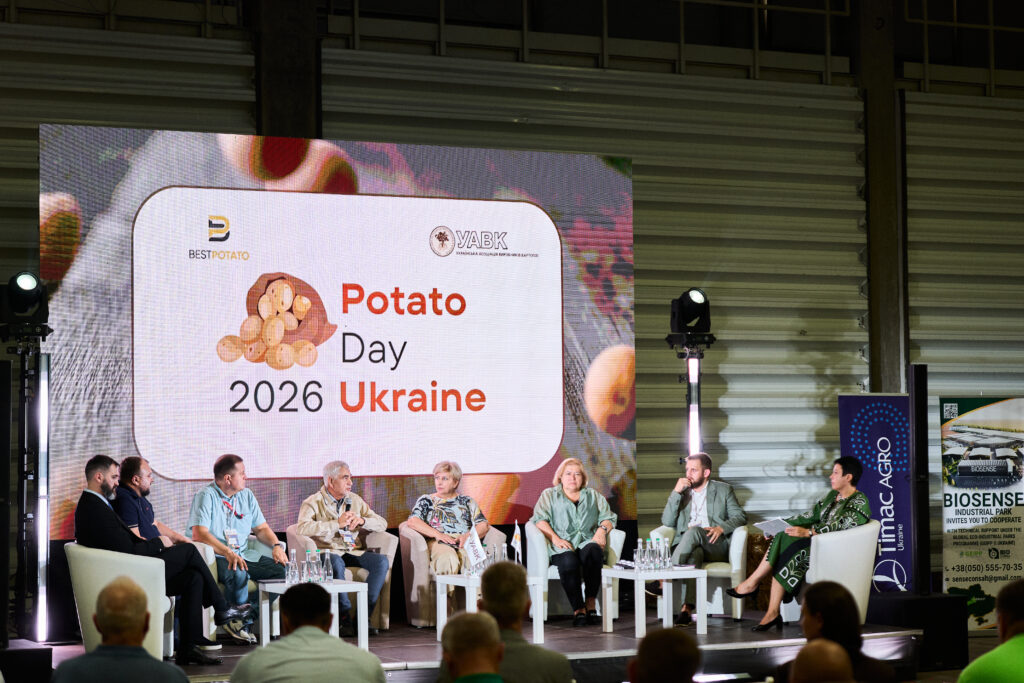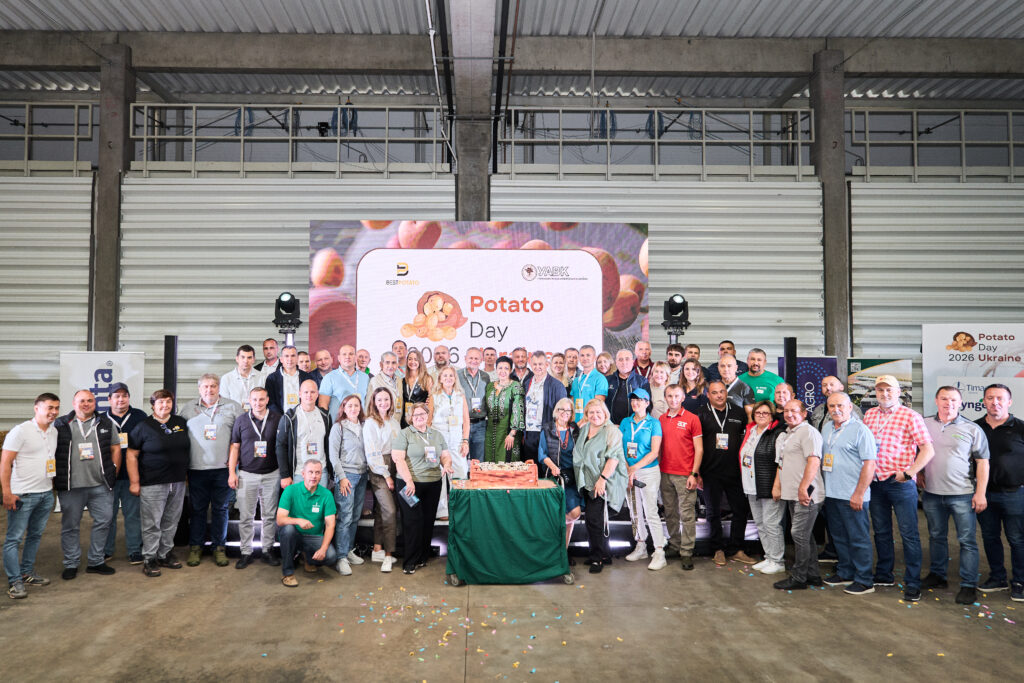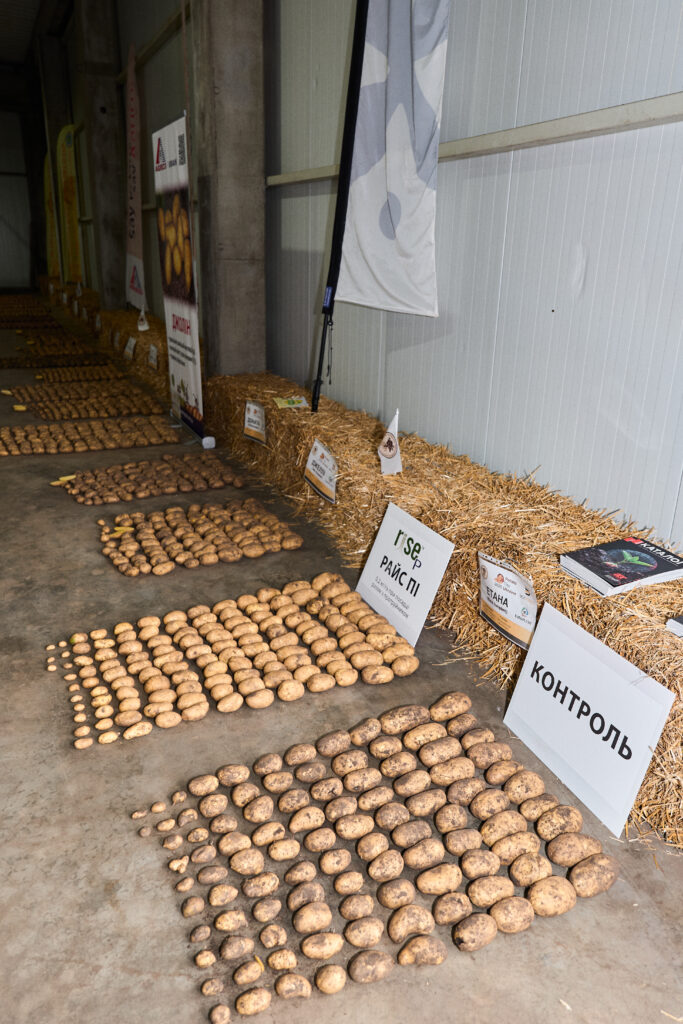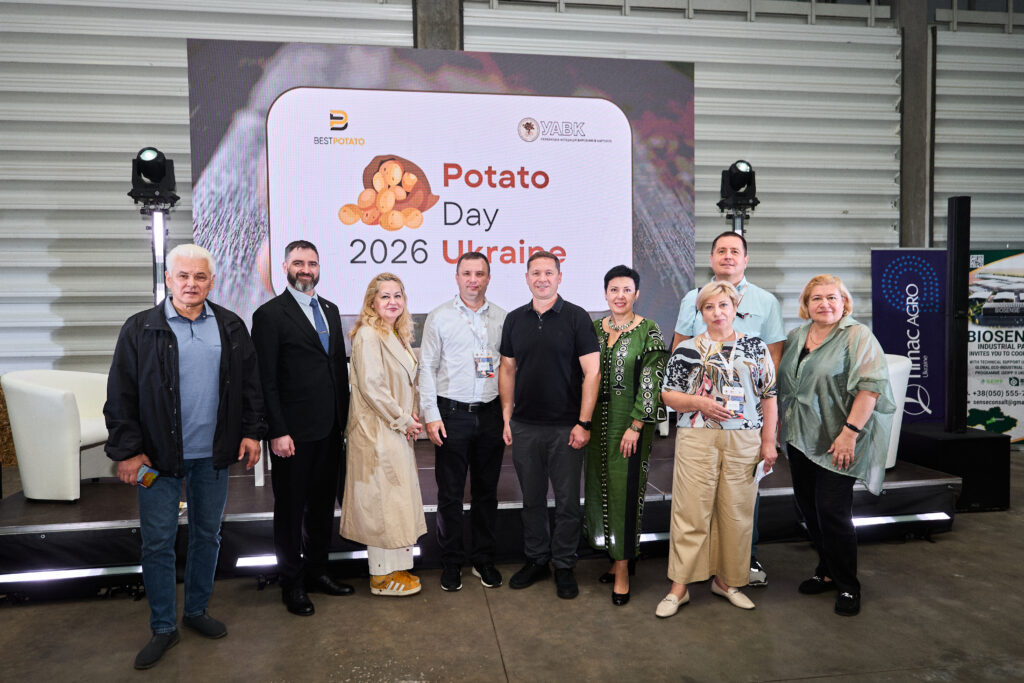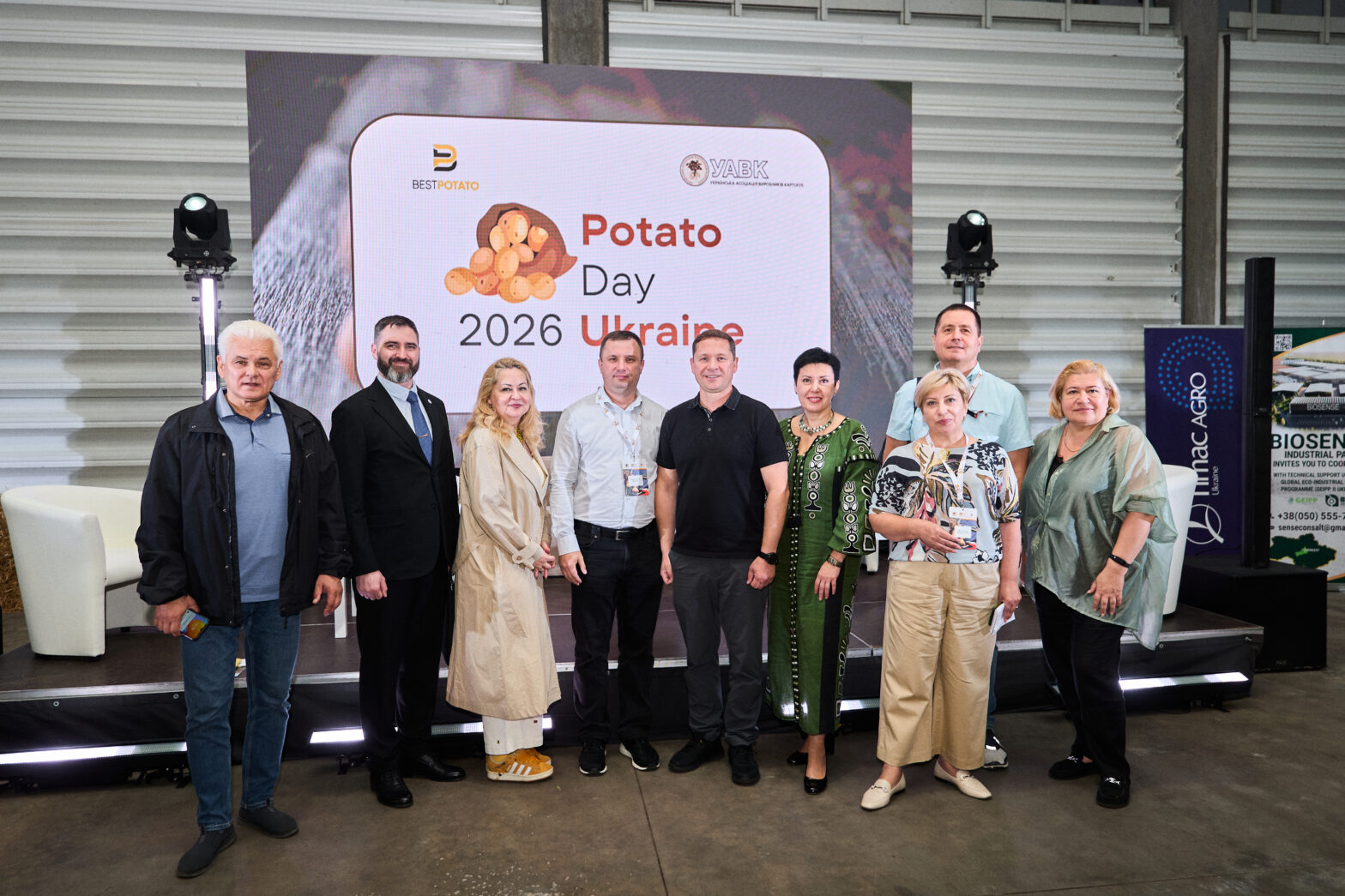
On 27 August 2026, Anton Kleshchov, National Coordinator of the GEIPP-II Ukraine project, took part in Potato Day Ukraine 2026, an industry forum organised by the Ukrainian Association of Potato Producers. He spoke in the panel “Potato Farming 2026: the state of the sector, processing horizons and the European vector”.
The focus of his speech was on the application of the eco-industrial park model in agri-processing. As Anton Kleshchov noted, agri-processing is one of the most resource-intensive types of production: it requires significant volumes of water, electricity, cooling, steam, and logistics infrastructure, while also generating substantial by-product flows. In potato processing, these include peelings, starch water, substandard produce, and pulp.
When an enterprise operates in isolation, each of these flows becomes a cost item. The eco-industrial park model reverses this logic: Resource Efficient and Cleaner Production approaches reduce enterprises’ operating costs.
The speaker highlighted three reasons why the EIP model delivers the greatest benefits for agri-processing.
First, shared infrastructure: treatment facilities, water treatment systems, cooling capacity, a boiler house and a laboratory represent significant capital costs for a single enterprise, but become economically viable when shared among several park residents.
Second, optimising capacity utilisation to account for seasonality: capacity that is underutilised during the off-season can be used by other park residents, helping to increase its overall utilisation.
Third, the shared use and processing of by-product flows: what represents waste or requires disposal costs for a single enterprise can, at the scale of several enterprises, become a resource for reuse. For example, a biogas facility may not be economically viable for a single enterprise, but can become a well-justified solution for a group of enterprises generating sufficient volumes of organic effluent.
Particular attention was given to a potato processing enterprise as the anchor resident of an ecosystem. Around it, value chains can develop in which starch water and organic residues are directed to a biogas facility, with the biogas returning as heat and energy to the production process; pulp and substandard produce become inputs for feed production; digestate returns to the fields as organic fertiliser; excess heat is used by neighbouring enterprises; and treated water is reused.
A practical example of this approach is the BIOSENSE industrial park in Cherkasy region, a potato processing cluster and one of the priority greenfield parks in the second phase of the GEIPP-II Ukraine project. Cooperation with the park has been underway since the concept planning stage, when decisions on the placement of production facilities, shared services, and synergies between future residents are the most cost-effective to make.
Online Assessment of Compliance of the Industrial Park with the EIP Requirements.
The GEIPP-II Ukraine project is implemented by the United Nations Industrial Development Organization (UNIDO) in partnership with the Ministry of Economy and Environment of Ukraine, with funding from the Government of Switzerland through the State Secretariat for Economic Affairs (SECO).